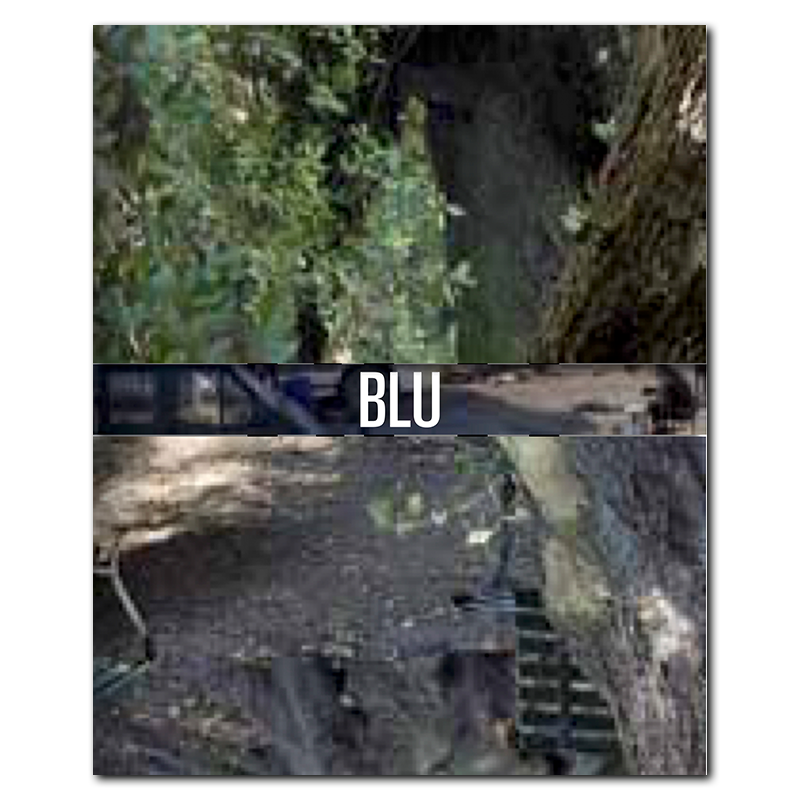
Cuny JanssenBLU
58,00 €
inkl. MwSt. und zzgl. Shipping costs
- 2015
- 104 pages
- 30 × 24,5 cm
- 80 colour illustrations
- softcover with double-folded dust jacket
- ISBN: 978-3-86442-157-0
- Edition: English
- Texts by: Ferdinando Brandi, Gabriele Conrath-Scholl, Patricia Pulles
- Design: SYB, Antwerpen
Anyone who has ever been to Naples is held captive by the beauty of this city: the view from the Museo Nazionale di Capodimonte across the Bay of Naples towards Capri and Ischia; the historic city centre with its fortifications and winding streets; or the famous botanical garden. BLU, Cuny Janssen’s new project, for which she now presents a book as enchantingly beautiful as it is unsettling, and which documents her travels from April 2012 to October 2013, is of course also about the light, about the different shades of blue that stand for the sensory experience of this city of a million inhabitants, which has been attracting visitors since the Middle Ages. The blue of the sky there – azzurro, turquoise, ultramarine, cobalt or indigo – prompted Goethe as early as March 1787 to remark that Naples was the “most agreeable part of the journey.” And with her pictures, which of course are also about the beauty of such a place, Cuny Janssen leads us, as always in her projects, into the world of children. In this book, too, she approaches her subject by way of the external view, searching for a kind of psychological disposition in the portraits of the children; it was for this ability that Freddy Langer declared her, in the FAZ – Frankfurter Allgemeine Zeitung in 2010, “the most remarkable photographer of children of our time.” And so the book stirs one up quite unexpectedly, for it depicts not only the children and adolescents of the Italian middle class but also confronts one with photographs of Roma children whose ghettoised life of poverty and dirt is written all over them. This creates an arc of tension with the perennial image of this breathtaking city, which is at the same time home to a scarcely imaginable human misery. Cuny Janssen herself had this experience, as she recounts to Gabriele Conrath-Scholl, the author of the volume. At her second photo shoot with Roma children they remembered the photographer and asked when school would at last begin for them too; they had taken Cuny Janssen for a social worker photographing them for the start of school. Thus the dilemma of all documentary photography – indeed of all travel – becomes visible, and unexpectedly one is enveloped by empathy as the very centre of this unusual photo book BLU.