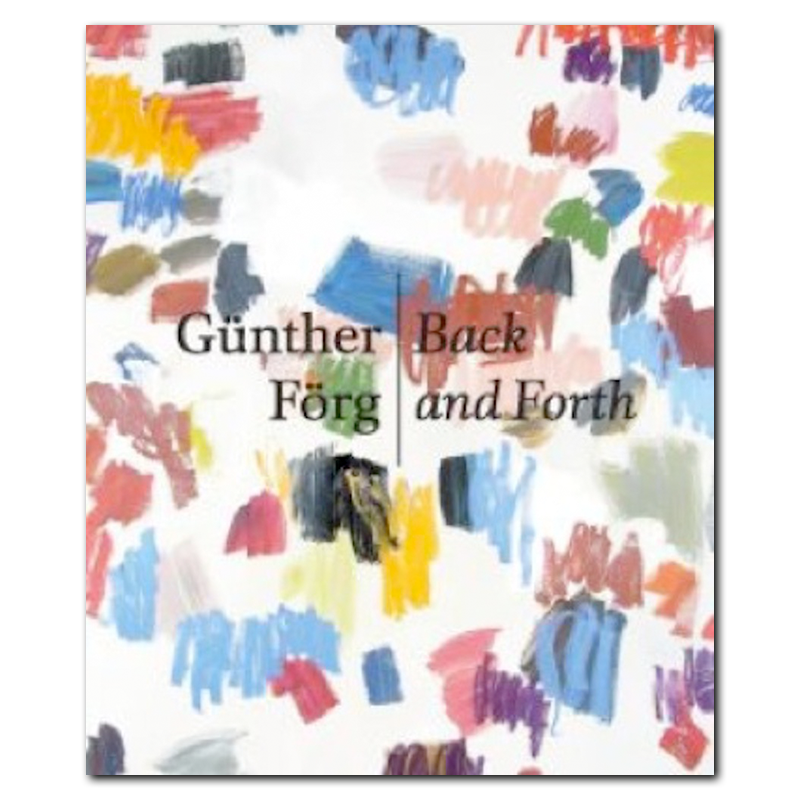
Günther FörgBack and Forth
198,00 €
inkl. MwSt. und zzgl. Shipping costs
- 2009
- 160 pages
- 35 × 29 cm
- 102 colour illustrations
- linen binding with cover and spine embossing, double-folded dust jacket
- ISBN: 978-3-936859-91-1
- Edition: English, German
- Texts by: Rudi Fuchs
- Design: Rutger Fuchs, Amsterdam
More than 100 new abstract canvases, carefully reproduced in this book in an unusual format, are the result of one of Günther Förg’s most intensive working periods in recent years, between late autumn 2008 and spring 2009. Into a basic grid that changes from format to format, the artist sets a sequence of well-calculated colour fields; each individual painting possesses a chromatic rhythm of its own, distinguished by a high degree of artistic as well as physical concentration. It is thus no coincidence that Rudi Fuchs, in a text that is linguistically stirring and yet precisely observed, finds an affinity between this work and Piet Mondrian’s last and most unusual painting, “Victory Boogie Woogie.” Yet the organisation of the palette of colours, complemented as it is by the structure of the individual colour field, already constitutes the essential difference between Günther Förg and any predecessor. It is, rather, the free movement of the brushstroke, the light upward and more forceful downward movements, alongside the choice of colour, that catapult each single composition beyond the results of all abstraction known to us so far. Or, as Rudi Fuchs remarks in conclusion: “Whether he painted vibrating colour fields or irregular grids of raw, fibrous lines, he always built clever strategies of refraction into their execution. Figuration had to give way in order to release the primal energy of brushstrokes in its purest form: fierce abstraction.”