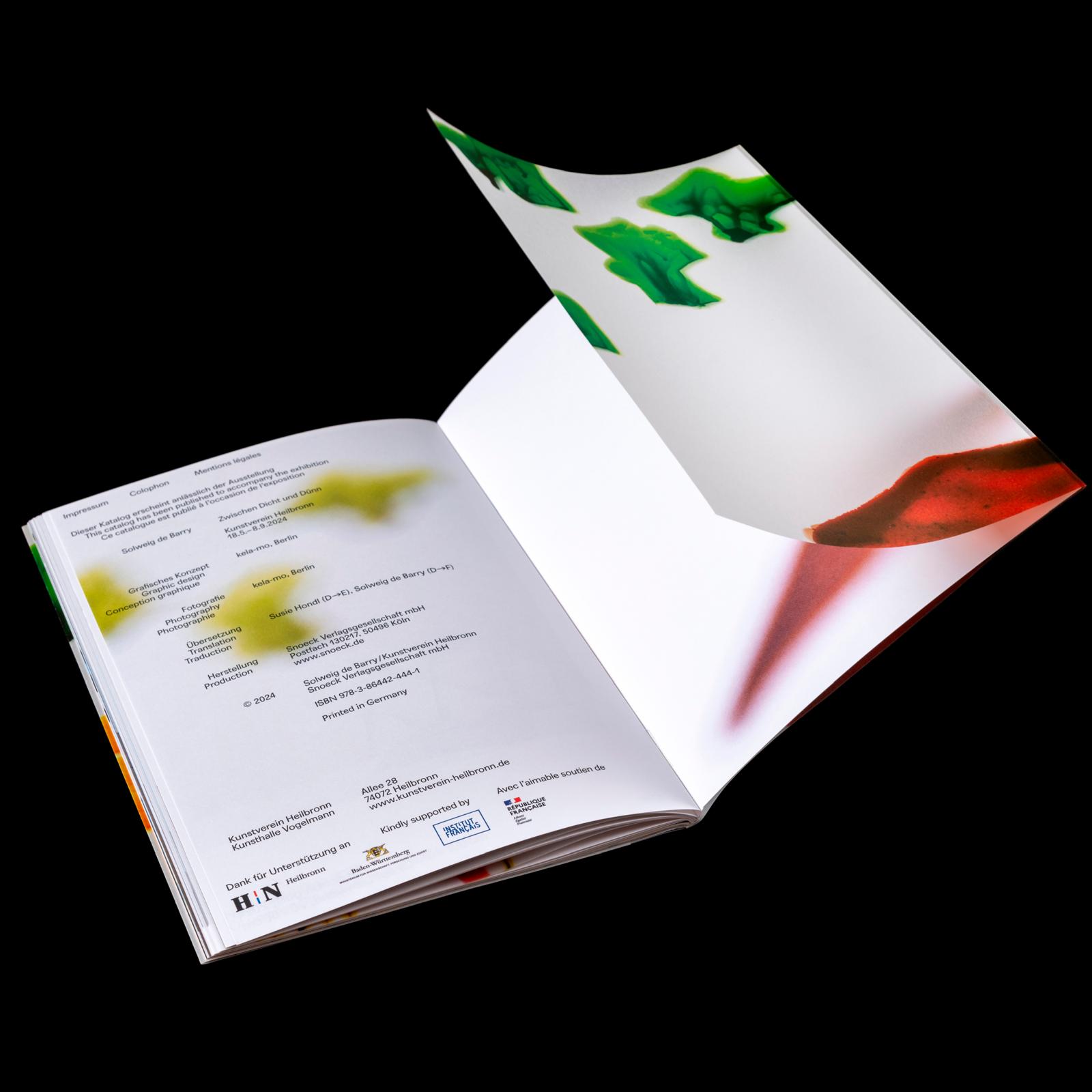
Solweig de BarryZwischen Dicht und Dünn
24,80 €
inkl. MwSt. und zzgl. Shipping costs
- 2024
- 40 pages
- 24 × 17 cm
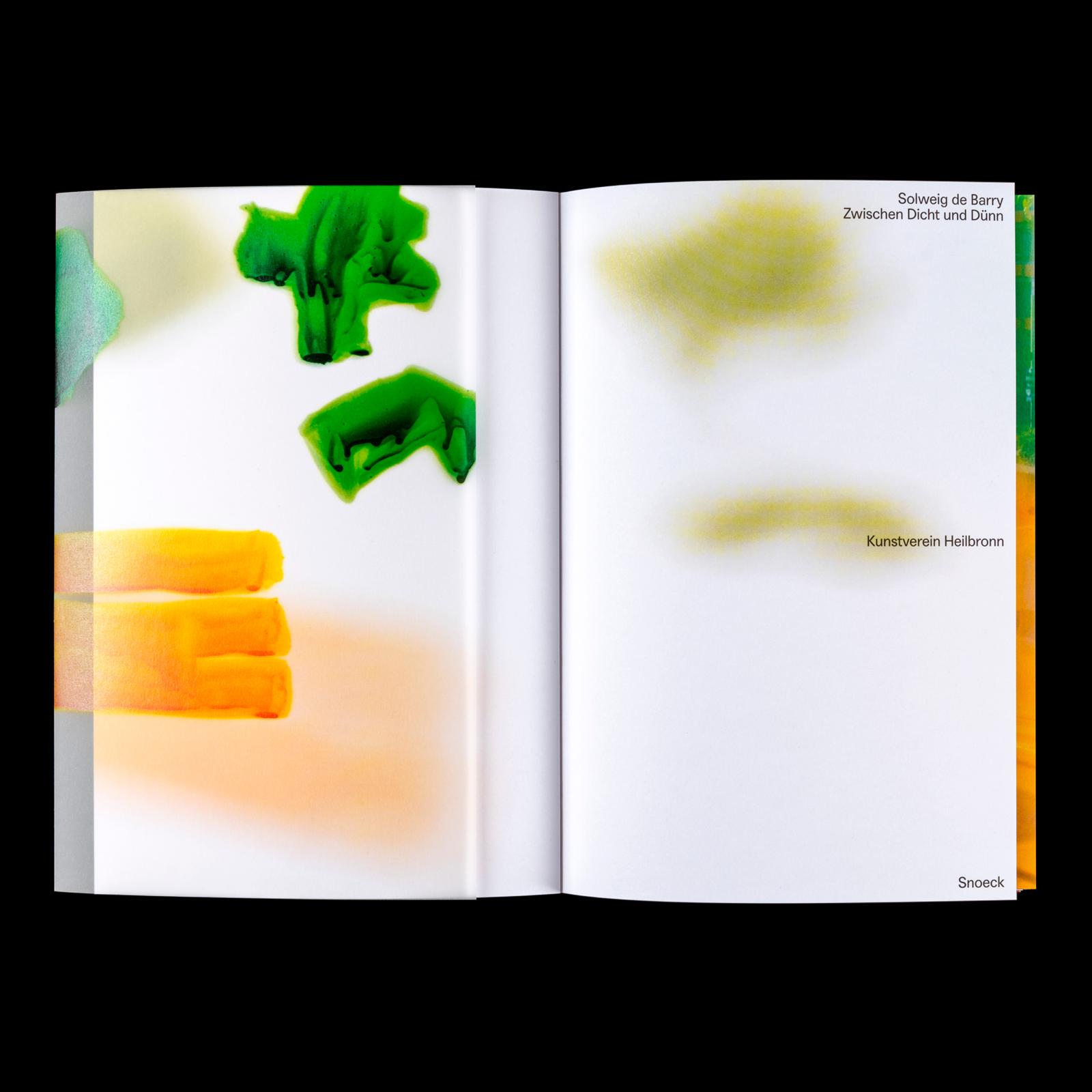
- 20 colour illustrations
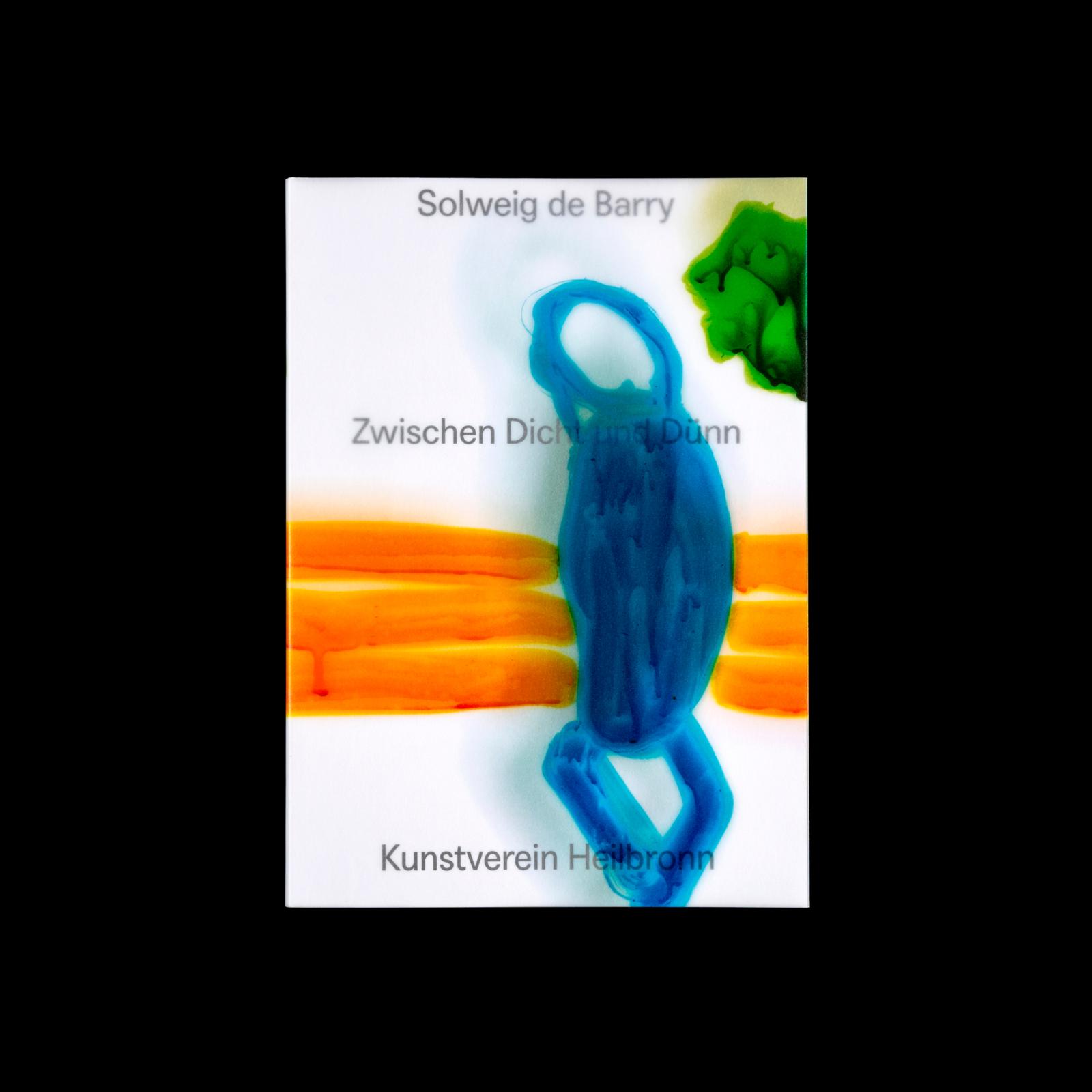
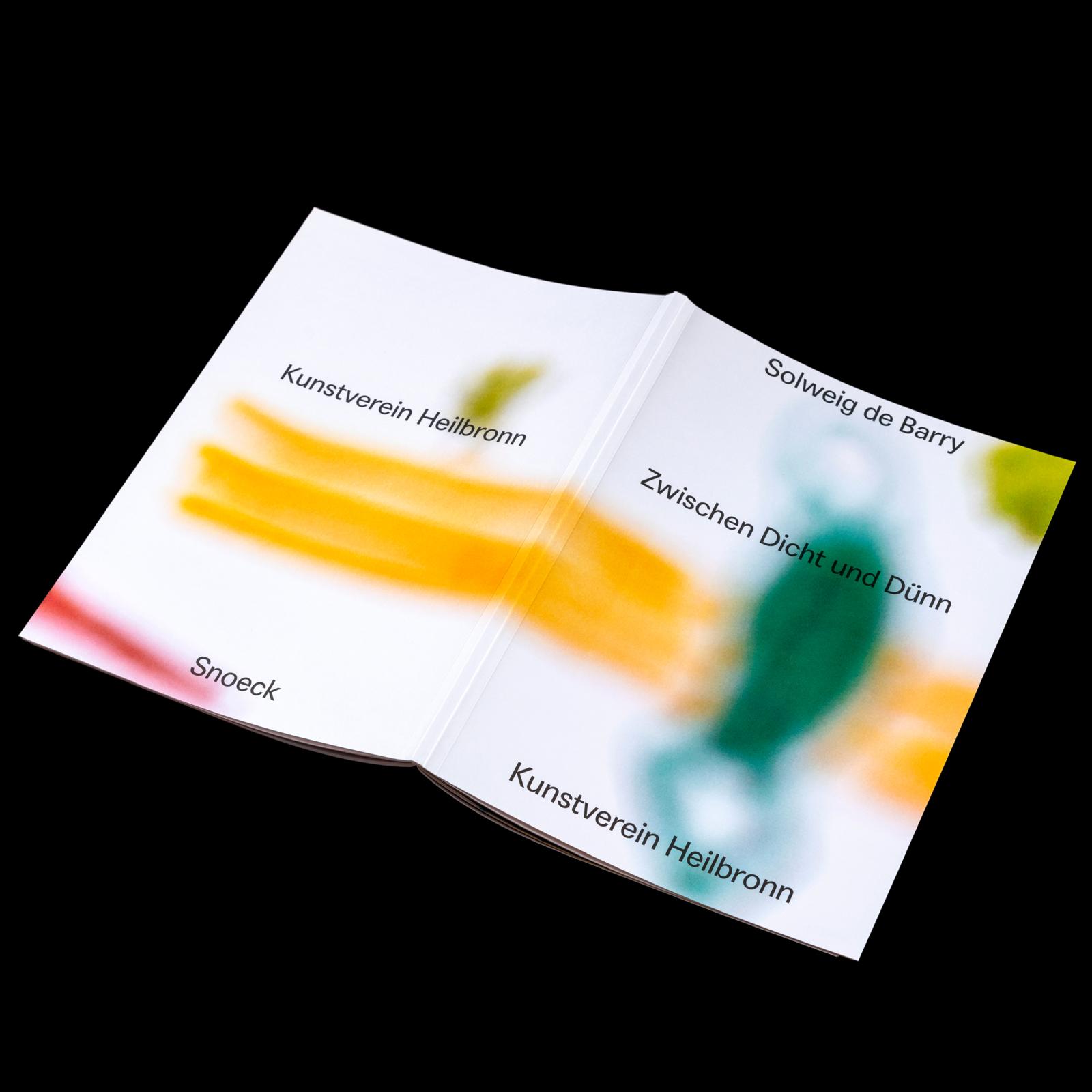
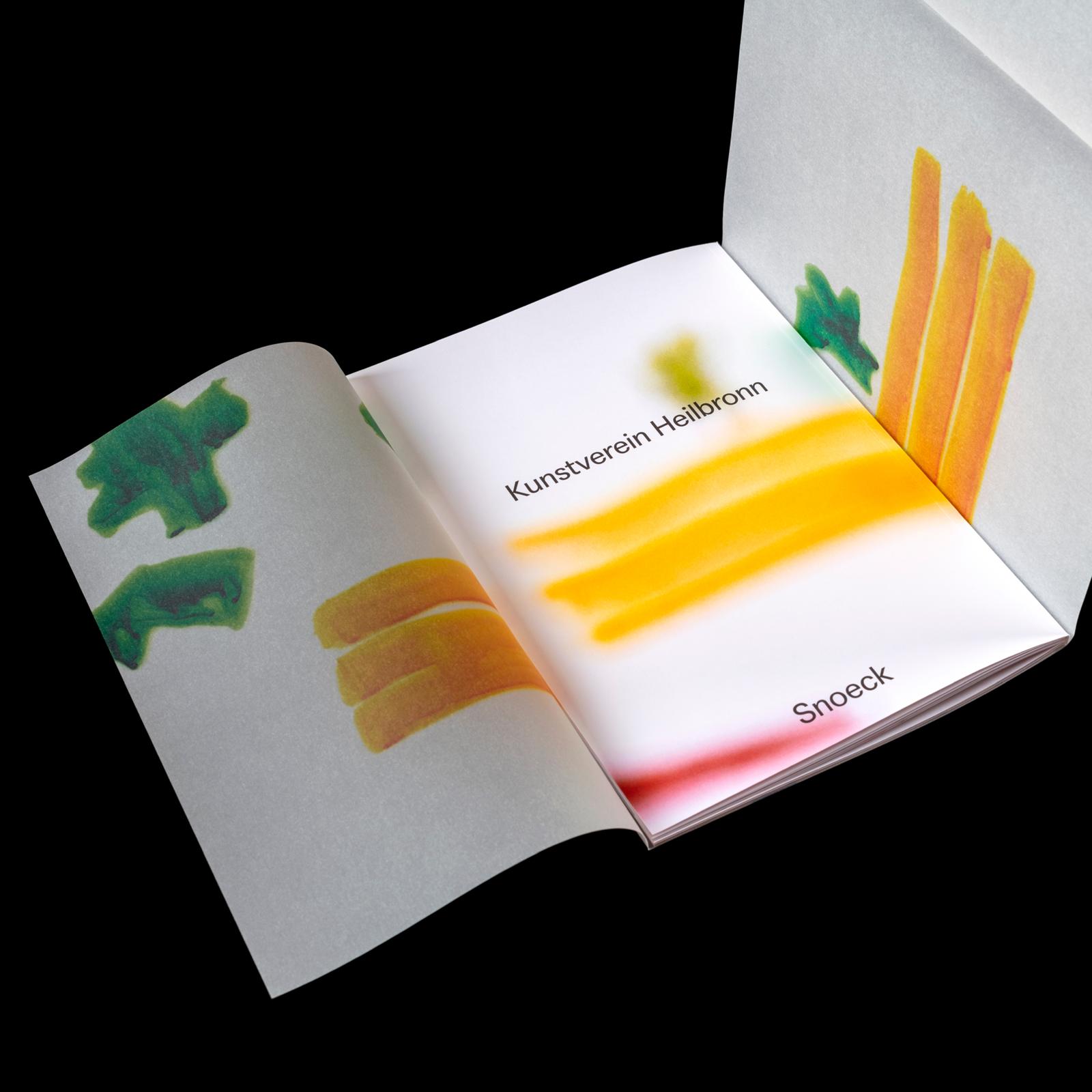
- paperback with translucent dust jacket
- ISBN: 978-3-86442-444-1
- Edition: German, English, French
- Institution: Kunstverein Heilbronn
- Edited by: Matthia Löbke
- Texts by: Matthia Löbke
- Design: kela-mo, Berlin
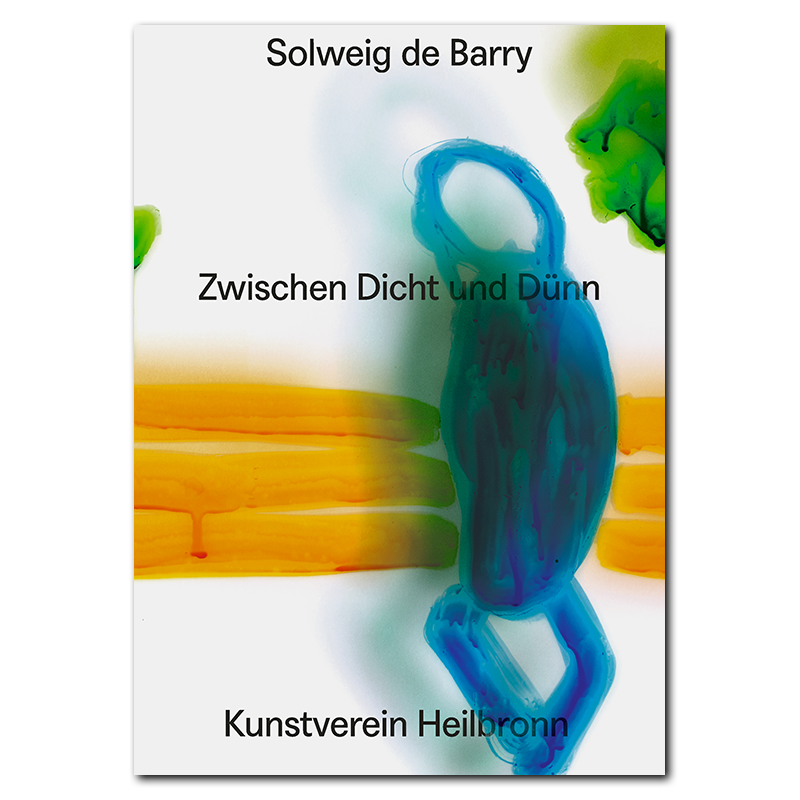
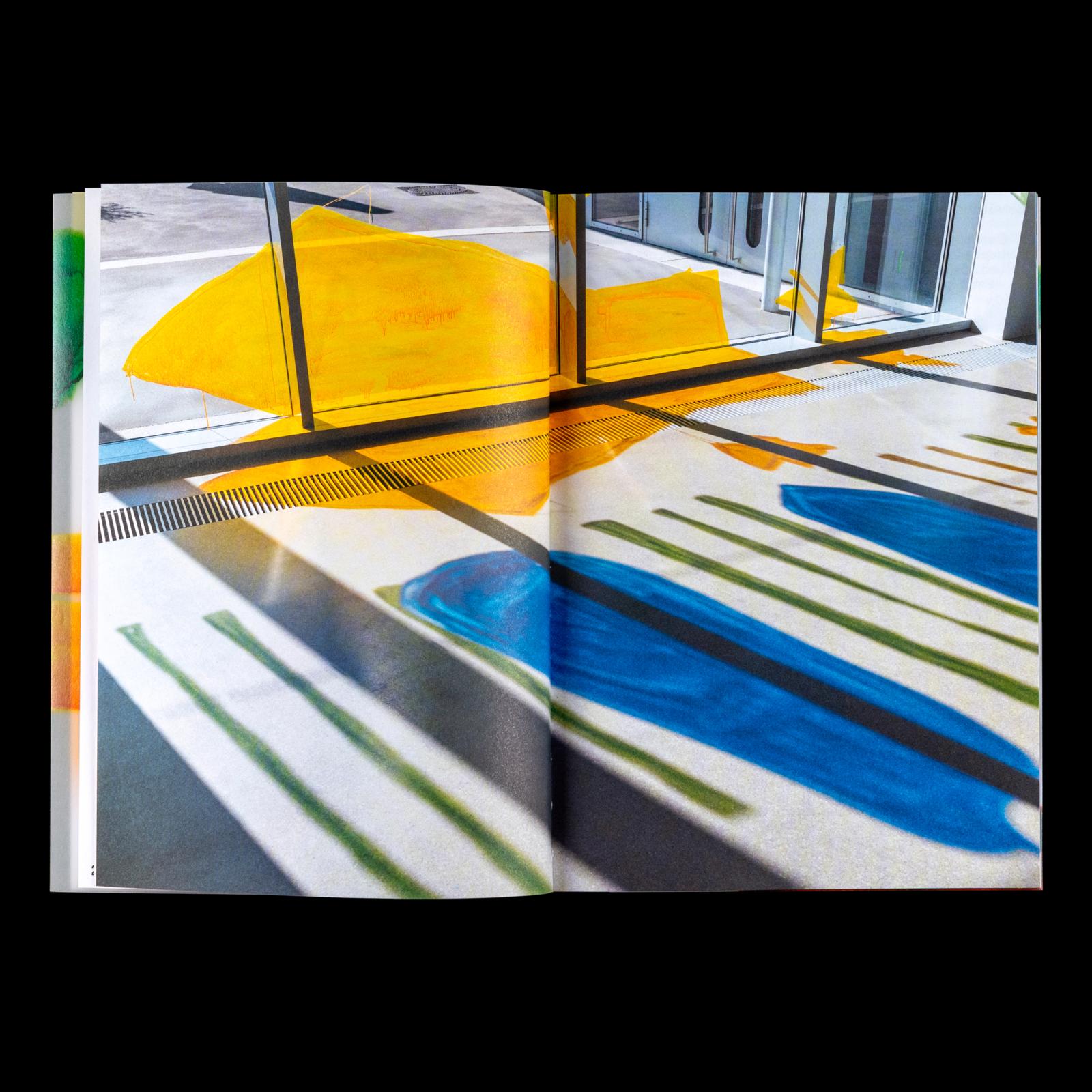
To the sun, to the light! Among the particular qualities of the painting of Solweig de Barry (*1987 in Strasbourg, lives and works in Berlin) is the balance between suggestion and full articulation, between conceptual distance and intuition, between representation and abstraction. The exhibition at the Kunstverein Heilbronn is the first extensive solo presentation of her work in an institution, with works on canvas and a glass painting on the Kunstverein’s large window front. Ever since the early Gothic period artists have asked themselves how they can paint with light. Over the centuries there have been impressive testimonies to this: the cathedrals of Chartres or Amiens, Le Corbusier’s chapel Notre Dame du Ronchamp or the stained-glass windows of contemporary artists such as Gerhard Richter in Tholey or, most recently, Olafur Eliasson in Greifswald, to name only a few. What they all have in common, however, is that colour and glass are firmly bonded to one another by the technical process of manufacture. Solweig de Barry, by contrast, has sought a way of realising painting on panes of glass in situ whose colour produces the same translucent effect as classical glass art, for most commercially available paints, such as finger paints or varnishes, cast only a grey or black shadow on the floor once they have been applied. The technique she has now developed for glass painting through experiments with inks and varnishes opens up for her the possibility of extending two-dimensional painting into space, of working with reflections and repetitions and of integrating the movement of the sun and of the light.
Exhibition:
Kunstverein Heilbronn, 18/5 – 8/9/2024