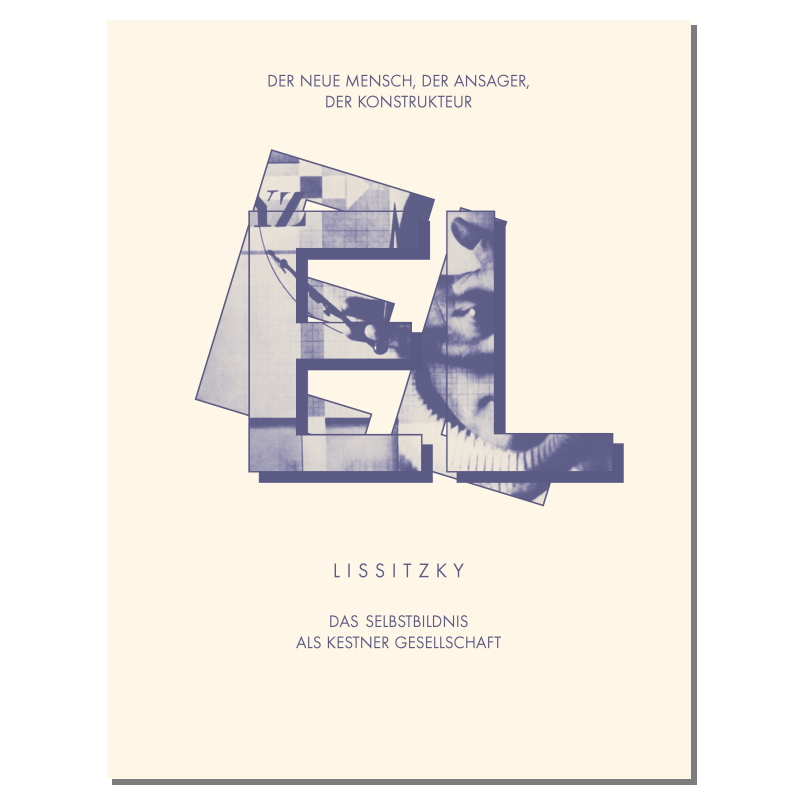
Kat. Kestner Gesellschaft Hannover, hrsg. von Alexander Wilmschen
Texts (German) by Kai-Uwe Hemken, Ines Katenhusen, Peter Rautmann, Marcelo Rezende, Gabi Sand, with an intro by Adam Budak and a foreword by Alexander Wilmschen
192 p. with 80 col. ill.
Format 20 x 26 cm, gatefold brochure
ISBN 978-3-86442-458-8 Categories2025, E, K, L, M, N
Kostenloser Versand in DE
Sichere Zahlung (PayPal, Kreditkarte)
Versand innerhalb von 2-3 Werktagen
Über dieses Buch
At breathtaking speed - EL LISSITZKY
Was verbindet »Zabriskie Point«, den Kultfilm der 1970er Jahre, der Studentenrevolte und Hippiebewegung, von Michelangelo Antonioni mit El Lissitzky, und was verbindet BEASTER, Johanna Billing, Martin Boyce und all die anderen zeitgenössischen Künstler*innen mit seinen Visionen als Architekt, Designer, Künstler und Fotograf? Eine der vielen Antworten ist, El Lissitzky (1890–1941) erzeugte durch seinen revolutionären Umgang mit Kunst, dem Raum und Typografie eine Integration visueller Elemente in eine dynamische wie interaktive Lesbarkeit des Dargestellten. Das atemberaubende Tempo, das er dabei einschlug, war mit dem »Sound« der 1920er Jahre verbunden, zumal in Deutschland, wo El Lissitzky zwischen 1909 und 1914 an der TU in Darmstadt Ingenieurswissenschaften studiert hatte, nachdem ihm als Jude ein Studium an der Kunsthochschule in St. Petersburg verwehrt worden war. Und so erklären sich seine Pendelbewegungen zwischen Moskau, Berlin, Köln, Zürich und Hannover, die ihn zu zahllosen Projekten von und mit Kurt Schwitters, Hans Arp, Jan Tschichold oder Willi Baumeister geführt haben. Er gilt nicht nur als einer der theoretischen Köpfe des Konstruktivismus, der später an verschiedenen russischen Hochschulen lehrte, sondern gab mit Ilja Ehrenburg in Berlin die Kunstzeitschrift »Gegenstand« heraus, arbeitete dort 1922 auch an der »Ersten Russischen Kunstausstellung« mit, war künstlerischer Leiter des sowjetischen Pavillons der »Pressa« genannten Presseausstellung 1928 in Köln und gestaltete 1929 für die Ausstellung »Film und Foto« des Werkbundes die Abteilung sowjetischer Künstler. In Hannover hatte er bereits 1923 auf Einladung der Kestner Gesellschaft die »Proun«-Mappe gestaltet, eine Mappe mit Lithografien und Collagen, ihr folgte 1928/29 für die Niedersächsische Landesgalerie der Auftrag zur Gestaltung des »Abstrakten Kabinetts«. Proun ist die Abkürzung von »Pro Unowis« und steht für die »Gründung neuer Formen in der Kunst«. Das meint einen unbegrenzten wie utopischen Raum, in dem die Gebilde schwerelos schweben und sich nicht nur durch Höhe, Breite und Tiefe definieren, sondern auch durch eine abstrakte Größe, die »Zeit«. Die Ausstellung in der Kestner Gesellschaft nun, zugleich eine Reminiszenz an ihre großen Leistungen und ihre historische Bedeutung, fand zum 100. Jubiläum der Proun-Veröffentlichung statt und steht für die Entwicklung der internationalen progressiven neuen Kunstbewegungen, die in einem Atemzug Künstler*innen wie El Lissitzky oder Kurt Schwitters mit dem Namen der Kestner Gesellschaft verbinden. Katja Strunz greift das auf, wenn sie sagt: »Meine Arbeit dreht sich um die Verflechtung von Zeit, Raum und Bewegung. Das Phänomen des Fallens und Faltens zieht sich durch alle meine Arbeiten und steht metaphorisch für eine Verdichtung von Raum und Zeit, den Zusammenbruch des Hier und Dort, des Jetzt und Damals. Mich interessiert, wie sich Veränderung räumlich und zeitlich manifestiert und welche Prozesse Transformationen auslösen. Durch den Rhythmus der Entfaltung und Faltung möchte ich einen Moment in der Zeit einfangen.« Damit bringt sie aus zeitgenössischer Perspektive auf den Punkt, welcher wichtige Impuls vom Gesamtwerk El Lissitzkys ausgeht und liefert zugleich für die Ausstellung aus dem Sommer 2023 in der Kestner Gesellschaft Hannover den Konnex, den dieses Buch nun tatsächlich dokumentiert.
Artists: Michelangelo Antonioni, Willi Baumeister, BEASTER, Johanna Billing, Martin Boyce, Max Buchartz, Heinrich Dunst, the next ENTERprise, Fernanda Fragateiro, Assaf Gruber, John Wood and Paul Harrison, Lajos Kassák, Marlena Kudlicka, Marysia Lewandowska, El Lissitzk, Felipe Mujica, Lászloó Moholy-Nagy, Paulina Ołowska, Peter László Peri, Prinz Gholam, Florian Pumhösl, Susanne Sachsse, Wieland Schönfelder, Kurt Schwitters, Katja Strunz, Nikolai Michailowitsch Suetin