Scrupulous and precise at the same time
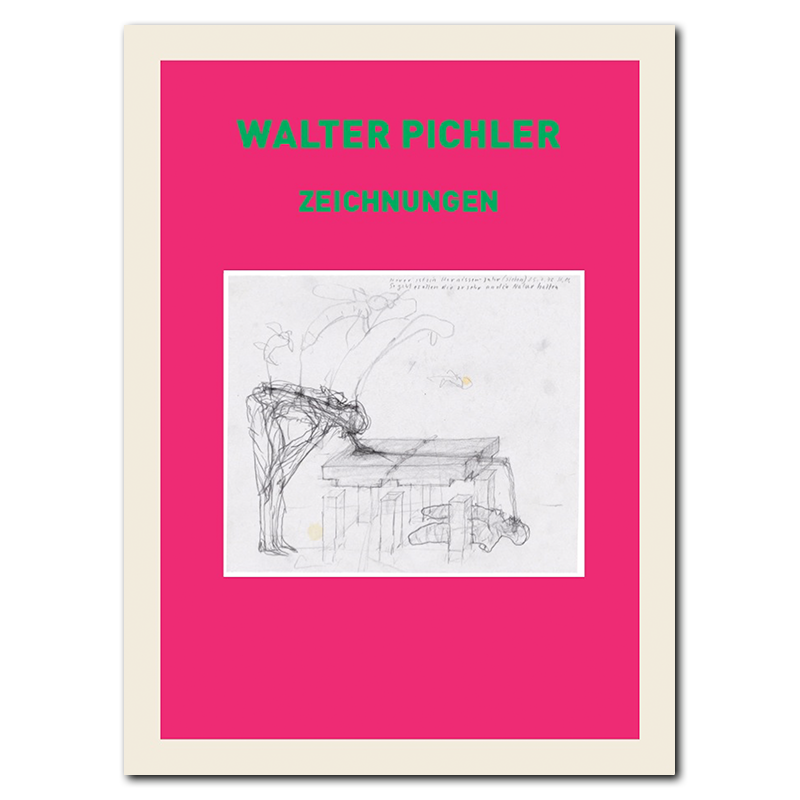
"If you make a drawing and it is free of intentions, you move away, and at the same time you become more and more precise. If you are too courageous, you isolate the object you want to report on, if you are too cowardly, you don't hit the object you intend to report on." Walter Pichler (1936-2012) is scrupulous, precise and at the same time claims a great deal of artistic freedom for himself, and at the same time demonstrates the approach to his work. On the one hand there is drawing, the basis of Pichler's work, but above all there is space and the essence of sculpture, the most important parameters of Pichler's work. They are expressed in works on a wide variety of themes: the person in space, the sculpture, the image of the sculpture, Pichler himself, the woman, the man, the head, the torso, the friend, the mother, the couple, the family, the child, the bed, an event, the dead person, the injured person, the wanderer, the drinker, the draughtsman, the guardian, the insulted person, the loiterer, a construction, a floor plan, the house, the room, the cross, an important detail, a conversation situation. It is therefore also about the human body, its sensations caused by certain conditions, which become materially and spiritually perceptible as states of consciousness, as Christian Reder, Pichler's companion and one of the two authors of this volume, writes. Early on, in his early thirties, Walter Pichler was internationally recognised as an independent and explicitly experimental artist who did not allow himself to be confined to any one genre, and subsequently had widely acclaimed exhibitions and participations: Museum of Modern Art (1967 and 1975), Documenta 4 (1968), Venice Biennale (1982, most recently in 2013 at Palazzo Enciclopedico), Städel Museum in Frankfurt/Main (1987), Stedelijk Museum Amsterdam (1998) and MAK in Vienna (1990 and 2011). Yet Walter Pichler is "one of those artists whose work has become increasingly enigmatic over time", as Stephanie Weber, the second author of the book, states, which may also have something to do with the fact that he was, as he himself said, "against ideas", i.e. vehemently opposed linking the artistic process to a purpose or ideology.
Exhibition:
CFA Contemporary Fine Arts, Berlin, 14/9 - 2/11/2013