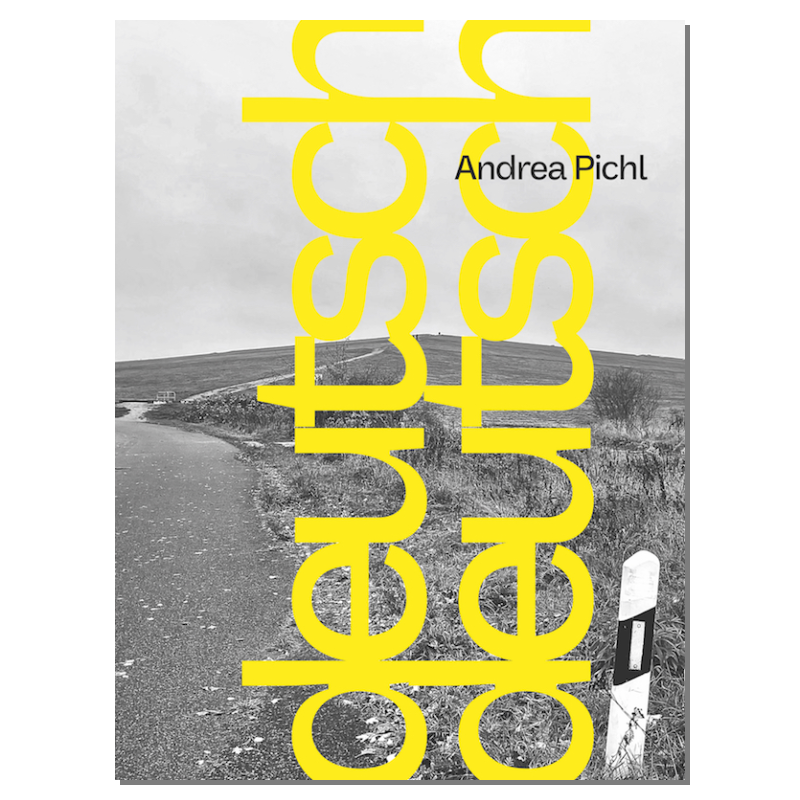
Andrea Pichldeutsch deutsch
48,00 €
inkl. MwSt. und zzgl. Shipping costs
- 2026
- 160 pages
- 28 × 21 cm
- 120 color illustrations
- hardcover
- ISBN: 978-3-86442-484-7
- Edition: German, English
- Institution: Kunsthalle Vogelmann, Städtische Museen Heilbronn
- Edited by: Marc Gundel with Rita E. Täuber
- Texts by: Sven Beckstette, Doreen Mende, Carsten Probst, foreword by Marc Gundel, text insert by Rita E. Täuber
- Design: Gruppe Sepia, Heilbronn
- Ernst Franz Vogelmann Prize for Sculpture 2026
“My first concern was that it has to hurt here, in the West,” said the Berlin-based artist Andrea Pichl (b. 1964, Haldensleben) on 28 April 2026 on SWR Radio Kultur, on the occasion of being awarded the Ernst Franz Vogelmann Prize for Sculpture 2026. This marks the first time the renowned award has gone to an artist who was born and raised in the GDR. Andrea Pichl is a conceptual sculptor: she researches, documents, and reconstructs in order to combine architectural formal elements, objects, everyday items, photographs, and drawings in her installations. In doing so, she opens up a field of overlapping layers of history and meaning, for which her biographical background serves as the backdrop. Her interest is directed in particular at the built environment – that is, architecture and standardized building forms in which political, social, and historical processes have become inscribed. The exhibition project on the occasion of the Ernst Franz Vogelmann Prize, extensively documented in this book, focuses on the “small happiness” that is staged with GDR garden sheds, Nazi-era makeshift homes, and present-day summerhouses from the DIY store as “exhibition spaces within the exhibition,” furnished with colored-pencil drawings, photographs, and objects of intra-German trade. Until 1989, there was a brisk, reciprocal transfer of capital, goods, and services between the two German states. Andrea Pichl casts the mutual dependency that resulted from this in its true light – with innocuous, “idyllic” landscape photographs of toxic waste dumps around Berlin, as well as with the coerced, harried production of consumer and luxury goods in GDR factories for West German mail-order giants. To this end, state agencies in the GDR founded the KoKo (Kommerzielle Koordinierung / Commercial Coordination), for which Alexander Schalck-Golodkowski perfected a perfidious system of exploitation and foreign-currency procurement from 1966 to 1989 – always with the full knowledge of his West German “trading” and political partners. Or, as Sven Beckstette put it “pointedly” in his laudatory speech: “Prosperity made in GDR. The exhibition title ‘deutsch deutsch’ – without a hyphen – emphasizes not the political division but the mutual dependency of the two states. After the fall of the Wall, new low-wage countries were then sought and found. A glance into our own wardrobes shows us as much.“
Exhibition:
Kunsthalle Vogelmann, Städtische Museen Heilbronn, 25/4 – 6/9/2026