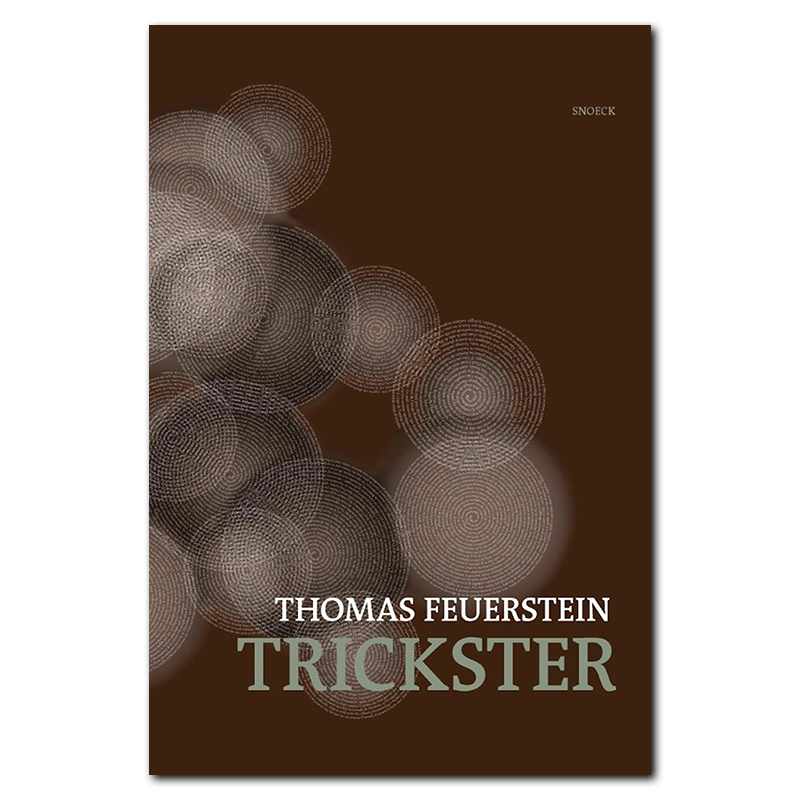
Exhibition catalogue, Kunsthalle Krems, edited by Hans-Peter Wipplinger
Texts (German/English) by Elisabeth Bronfen, Candyman, Gerhard J. Lischka, Astrid Mania and with an interview by Sabeth Buchmann with Thomas Feuerstein
368 p. with 250 colour illustrations
Format 28 x 21.5 cm, hardcover
TRICKSTER "has little to do with a classic concept of sculpture"
When Thomas Feuerstein (*1968) is asked about his exuberant work, which deals with biology, literature, art history, philosophy, medicine, cybernetics, religion, sex, economics and the mass media, as well as the effects of biopolitics on the individual and the dream of eternal youth, he likes to respond in writing with a literary statement. And the daring enumeration of his work then resembles a complex literary theory of real life all the more, because he himself responds with an adventurous narrative, such as his story "Plus ultra. The Hercules Project". Here, Thomas Feuerstein describes the boxer, magazine publisher, Dadaist and dandy Arthur Cravan, thus focussing on a person from the 1920s who, in more recent times, some 60 years later, haunts pop history as an idol and feeds the myth of the anarchic anti-hero, as it were. However, this literary image is only a parable for Feuerstein's model of machines and bioreactors, with which art is produced in a very classical sense, for example with an automatic writing mechanism borrowed from the famous "Écriture automatique" of the Surrealists, which in his case is based on the notation of price fluctuations. In addition, organic matter, enzymes and catalysers form molecular sculptures and thus a processuality that leads to manifestos that are only known from art history. His concept of form, says the artist, "has little to do with a classical concept of sculpture. The material, including its molecular structures and the associated processes and transformations, plays a specific role. I don't see form as the opposite of matter, but as a structure that can take on different shapes and figurations."